

Table of Contents
- Physical Invitations vs Digital Invitations: A Side-by-Side Comparison
- Cost and Budget Considerations
- Formality, Etiquette, and Guest Expectations
- When to Send Wedding Invitations and RSVP Timelines
- Online Wedding Invitations with RSVP Tracking
- Wedding Invitation Printing and Mailing Best Practices
- A Hybrid Approach: Combining Physical and Digital Invitations
- Accessibility, Privacy, and Technical Considerations
- Frequently Asked Questions
Last Updated: October 17, 2026
Physical Invitations vs Digital Invitations: A Side-by-Side Comparison
When you're planning a wedding, the invitation sets the tone for everything that follows. But here's the tension: the choice in physical vs digital invitations isn't just about preference anymore. It's about what your guests actually expect, how much you're willing to spend, and what kind of experience you want to create. At The Invite Lady, we've helped thousands of couples navigate this exact decision, and the answer depends far more on your specific situation than on any universal rule.
Physical invitations are tangible, formal, and leave a lasting impression. They arrive in a mailbox, get displayed on refrigerators, and signal that you've invested thought and care into the event. Digital invitations are fast, eco-friendly, and make RSVP tracking effortless. They reach guests instantly and eliminate printing and postage costs entirely.
The real question when weighing physical vs digital invitations isn't which is objectively better. It's which aligns with your wedding style, your budget, your timeline, and your guest list. Below, we'll break down exactly where each wins and where it falls short so you can make the choice that fits your celebration.
Comparison Table
| Factor | Physical Invitations | Digital Invitations | Best For |
|---|---|---|---|
| Cost per guest | $1.95-$5+ (printing, envelopes, postage) | Free to $2 per guest | Budget-conscious couples |
| Delivery speed | 5-14 days via mail | Instant | Last-minute events |
| Formality level | High; conveys elegance | Lower; casual feel | Formal weddings vs. casual celebrations |
| RSVP tracking | Manual; requires follow-up | Automated; real-time data | Organized planners |
| Environmental impact | Paper waste; carbon footprint | Zero waste; digital-only | Eco-conscious couples |
| Personalization | Custom design, paper quality, envelopes | Custom design, digital features | Both support customization |
| Guest experience | Keepsake; memorable unboxing | Convenient; accessible on any device | Varies by guest preference |
| Accessibility | Requires physical handling | Works for guests with mobility issues | Inclusive celebrations |
Cost and Budget Considerations
Physical invitations cost more upfront, but the actual expense depends on what you choose. A basic printed card starts around $1.95 per card with matching envelopes, but premium options, custom designs, or specialty paper can push costs higher per guest. Add postage at $0.68 per piece (for standard mail), and a 100-guest wedding easily hits $300-$500 just for invitations.
Digital invitations eliminate printing and postage entirely. Many platforms offer free options, while premium digital suites run $1-$2 per guest. For a 100-guest wedding, that's $0-$200 total.
But here's what matters: the cost difference only matters if you're comparing like for like. A simple, elegant printed card from The Invite Lady at $1.95 per card creates a keepsake your guests will keep. A free digital invite gets deleted after the RSVP. The perceived value isn't the same, even if the dollar difference is real.
For couples on tight budgets, digital is the obvious choice. For those willing to invest in a tangible, memorable first impression, physical invitations deliver something a screen never can. The question is which trade-off aligns with your priorities.
Formality, Etiquette, and Guest Expectations
Formality matters. A black-tie wedding calls for printed invitations on quality cardstock. A casual backyard celebration can absolutely use digital. The invitation format signals the tone of your event before guests even arrive.
Physical invitations convey formality and intention. They suggest you've planned carefully, invested resources, and value tradition. This matters for formal weddings, multi-day destination events, and celebrations where you want to set a sophisticated tone. Guests who receive a printed invitation know this event is important.
Digital invitations feel more casual by default. They work perfectly for relaxed celebrations, intimate gatherings, and events where the focus is on fun rather than formality. They also work well for younger guests who expect digital communication.
Wedding etiquette traditionally favors printed invitations for formal events (Wedding Invitations 101: A Comprehensive Guide). But that's changing. Digital invitations are increasingly accepted for all but the most formal affairs. The real rule: match the invitation format to the wedding's formality level. A formal black-tie wedding with a digital invite feels mismatched.
Consider your guest list too. If most guests are under 40 and digitally native, they may actually prefer digital. If your crowd skews older or more traditional, physical invitations show respect for their expectations.
When to Send Wedding Invitations and RSVP Timelines
Timing shapes the entire planning process. Physical invitations need to go out 6-8 weeks before the wedding to give guests time to receive mail, consider their schedules, and respond. Digital invitations can go out 4-6 weeks before because delivery is instant.
Here's the workflow difference: with physical invitations, you design, print, and mail 8 weeks out. Guests receive them within 7-10 days. You give them 3-4 weeks to RSVP. With digital, you send everything 4-5 weeks before the wedding, and guests respond within days.
If your wedding is fewer than 6 weeks away, digital is the only realistic option. Physical invitations require lead time that you simply won't have. If you're planning a destination wedding or a formal event with complex logistics, the extra time physical invitations provide is valuable, it gives you a longer window to track responses and follow up with stragglers.
Online Wedding Invitations with RSVP Tracking
Digital platforms make guest management dramatically easier. Most online wedding invitations with RSVP tracking offer real-time dashboards where you see exactly who's coming, who hasn't responded, and any dietary restrictions or plus-one details guests provide.
This automation saves hours of manual work. You don't have to call people, track responses in a spreadsheet, or chase down missing RSVPs. The system does it for you. You can set automatic reminders that nudge guests who haven't responded, and you get a final count without having to do the math yourself.
The platform also handles logistics that would be painful to manage manually: dietary preferences, song requests, photo sharing after the event.
The trade-off is that digital feels less personal to some guests. A screen-based RSVP lacks the ceremony of writing a response by hand and mailing it back. For formal weddings, this matters. For casual celebrations, it's actually a bonus, fewer steps means higher response rates.
Wedding Invitation Printing and Mailing Best Practices
If you're going physical, execution matters. Here's what separates a great printed invitation from a mediocre one.
Start with paper quality. Cardstock that feels substantial in hand signals quality. Matte finishes photograph better than glossy. Thinner paper feels cheap, even if the design is beautiful.
Design should be legible and aligned with your wedding's aesthetic. Avoid tiny fonts or complex layouts that confuse guests. Include all essential details: date, time, location, RSVP deadline, website (if you have one), and dress code.
Envelopes matter too. Include matching envelopes with your cards, they're part of the package. Consider adding a return address so guests know where to send RSVPs. Hand-addressing envelopes adds a personal touch for formal events, though it's time-consuming.
Postage is a detail people overlook. Standard postage ($0.68) works, but consider using a commemorative stamp that matches your wedding colors or theme. It's a small touch that guests notice.
The Invite Lady's Save the Date Cards come with white envelopes included, which simplifies the process. Designs like the Watercolor Ombre Sage Green Save the Date Cards use premium matte cardstock that feels high-quality in hand and photograph beautifully.


Mail your invitations on a Tuesday or Wednesday so they arrive mid-week when people are more likely to open mail. Avoid sending right before a holiday when mail piles up.
A Hybrid Approach: Combining Physical and Digital Invitations
Here's where most couples miss an opportunity: you don't have to choose just one format. A hybrid strategy uses both physical and digital invitations to maximize impact, reach, and efficiency.
Send physical save-the-dates early to set a formal tone and give guests a tangible reminder. Then follow up with digital formal invitations for guests who prefer digital, or as a backup for those who didn't receive the physical card.
This approach works particularly well for destination weddings. Physical save-the-dates signal that the event is significant and formal. Digital invitations handle the logistics and RSVP tracking.
A hybrid strategy also solves the accessibility problem. Some guests have mobility issues that make handling physical mail difficult. Digital invitations ensure everyone can RSVP easily. Others prefer the tactile experience of a printed card. Offering both respects your guests' preferences.
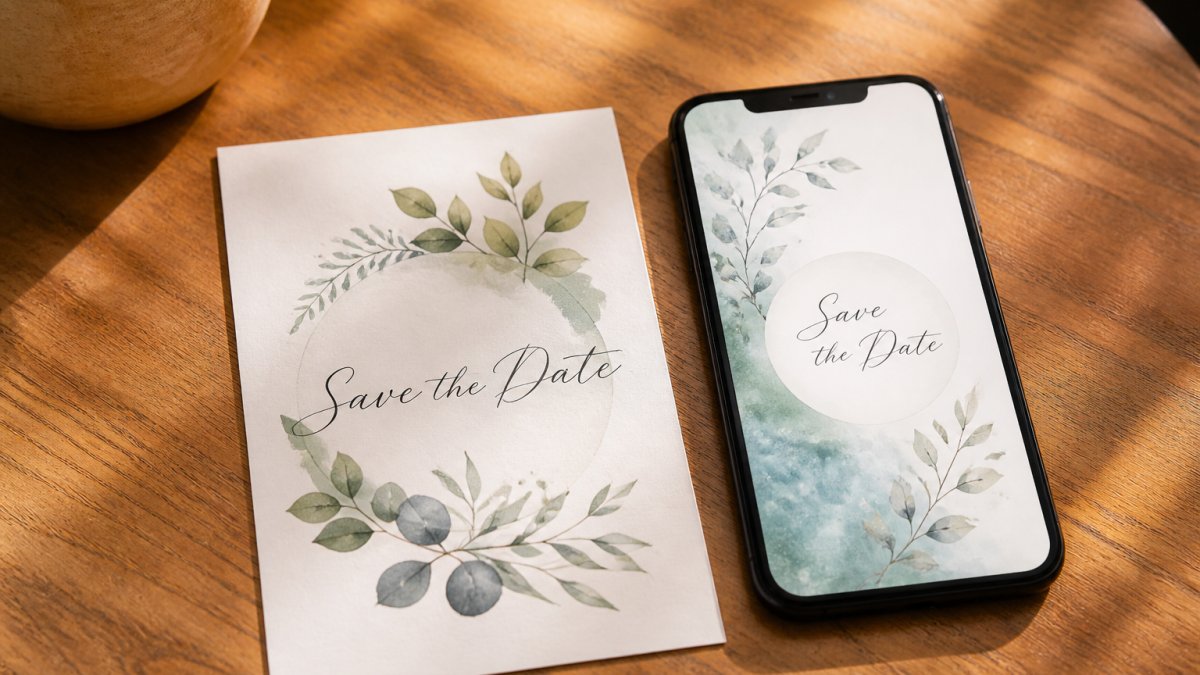
The logistics are simple: use The Invite Lady's Save the Date Cards or a themed option like the Hydrangea Save the Date Card for the physical announcement. Then send digital formal invitations through a platform that handles RSVP tracking.
Accessibility, Privacy, and Technical Considerations
Digital invitations solve some accessibility problems but create others. A guest with vision impairment can use screen readers to access digital invitations, which is impossible with printed cards.
Physical invitations are universally accessible, anyone can read a printed card. But they're not accessible to guests with mobility limitations who struggle to handle mail.
The hybrid approach addresses both issues. Offer physical invitations as the primary format, but include a digital RSVP option (a website or QR code on the card).
Privacy and security also differ. Physical invitations can be lost or misdelivered, mail goes to the wrong address, gets stolen from mailboxes, or sits in a pile for weeks.
For sensitive information (like a private wedding location for security reasons), physical invitations are more controlled, only the intended recipient handles them. Digital invitations can be forwarded, screenshotted, or shared unintentionally.
Technical glitches also matter. Email delivery isn't guaranteed, invitations land in spam folders regularly. Digital platforms occasionally go down. Physical mail is slower but more reliable.
Consider a mixed strategy: send physical invitations to guests you know prefer traditional communication, and digital to those who are digitally savvy.
The choice between physical and digital invitations for weddings ultimately depends on your wedding's formality, your timeline, your budget, and your guests' preferences.
Start with The Invite Lady's customizable printed invitations, options like the Watercolor Ombre Dusty Blue Save the Date Cards or the Painted Beach Save the Date Card deliver the high-quality, personalized stationery that sets the perfect tone for your wedding. Your guests will feel the care you've invested, and you'll have the organized, efficient planning process you need. Shop All Invitations and create the celebration your special day deserves.

Frequently Asked Questions
Are digital wedding invitations appropriate for a formal wedding?
Digital invitations can work for formal weddings if designed with sophistication and sent through a professional platform. However, traditional etiquette still favors printed invitations for black-tie or ultra-formal celebrations. Many couples solve this by sending a printed save-the-date followed by a digital invitation, or using a hybrid approach where the formal invitation is printed but RSVP collection happens online. The key is ensuring your digital invitation reflects the formality of your event through design quality and presentation.
How much do printed and digital wedding invitations cost?
The Invite Lady's Save the Date Cards start at $1.95 per card and include matching envelopes, making them cost-effective for printed stationery. Digital files are available as a one-time purchase. For a 100-guest wedding, printed invitations usually cost more due to postage and production, while digital remains minimal after initial design.
When should you send digital or printed wedding invitations?
Send save-the-dates 6-8 months before your wedding, then formal invitations 6-8 weeks before. Digital invitations can be sent slightly later (4-6 weeks out) since delivery is instant. Digital invitations work well for casual weddings and quick turnarounds, while printed invitations require earlier planning. A hybrid approach lets you send a printed save-the-date immediately and a digital invitation later for RSVP convenience.
Can you send both paper and digital wedding invitations?
Yes, a hybrid approach is increasingly popular. Many couples send a printed save-the-date or formal invitation with a digital RSVP link included, or send the printed invitation followed by a digital reminder closer to the event. This combines the personal touch and keepsake value of printed stationery with the convenience and tracking benefits of digital RSVP collection. Just be clear about which method guests should use to respond to avoid duplicate RSVPs and confusion.